
April 30th, 2022:
Below are 8 quick strategies that I recommend using to reduce test taking anxiety on Math tests:
- Use a three column method for creating a study guide. Column 1 should have a word/math rule. Column 2 should have a description of the word/math rule. Column 3 should have an example of the word/math rule.
- Write out the steps for solving the problem or the equations you will need at the top of your paper. Then, refer back to the list of steps or equations during the test.
- Another option is to write a checklist of 3 concepts that you want to check for at the end of your exam. For example, a negative times a negative is a positive or the inverse of multiplication is division. Then, when you are done with your test, check it over to see if you included those three things.
- Know your accommodations. If you qualify for extra time, test reader, or the use of a graphing calculator, make sure you use these accommodations..
- Talk to yourself or use your inner voice while showing your work. If you don’t have a scribe, imagine you are explaining the steps for solving a problem to someone as you write or draw out the math problem.
- Stick with the problem. It’s tempting to want to solve a problem quickly in our heads or to give our best guess. Slow down. It’s ok to take your time solving the problem if it means that you’ll get it right.
- Take a deep breath to relax your brain and increase your focus.
March 23rd, 2022: School food and plant adoption?


March 23rd, 2022. Greetings from Fulbright in The Netherlands. As I’m on a Fulbright scholarship for the semester, I like asking my students for their opinions of Dutch education. Below is a question I asked them on google classroom:
Of course I need to ask your opinion on school food and plants.
I was given a tour of a Montessori Secondary School (completely free school by the way) in a city called The Hague that is about two hours outside of Amsterdam and close to the ocean (yes, there is a beach in The Netherlands…I was surprised, too). One of the students is an economics major and the other one is a science major.
1) School food: How do you feel about having a local vendor selling you lunch from the school cafeteria?
Pros: You can buy a sandwich for only $2 or a pastry/pizza for a $1.
Cons: There is a lack of variety. The food is not free.
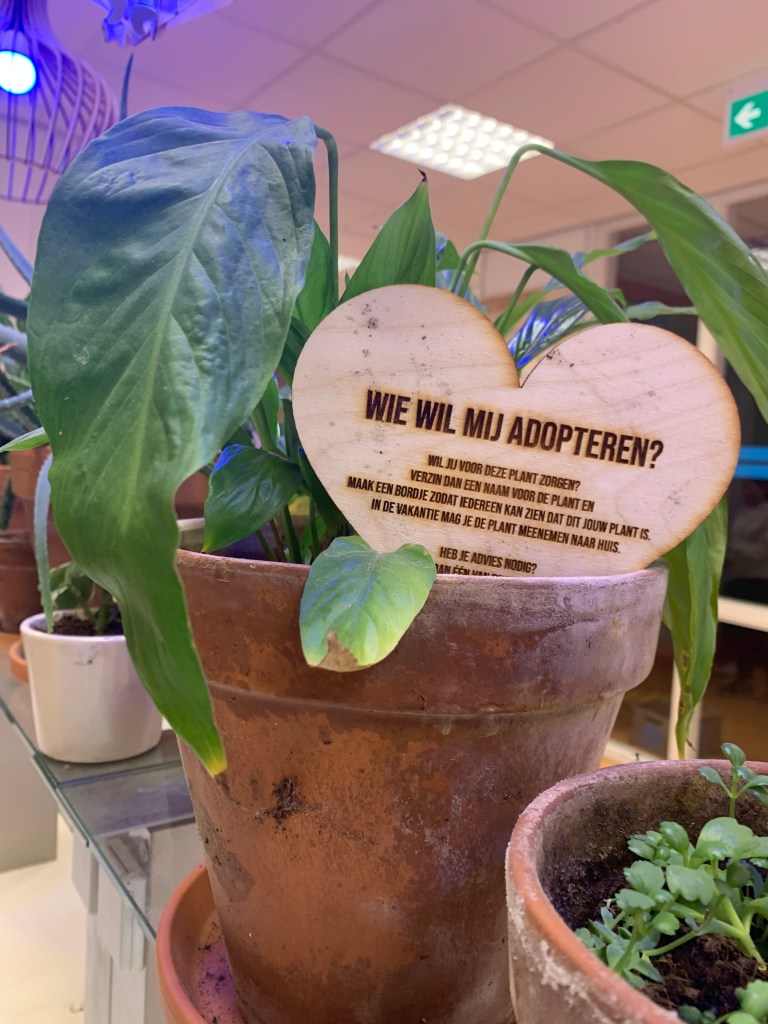
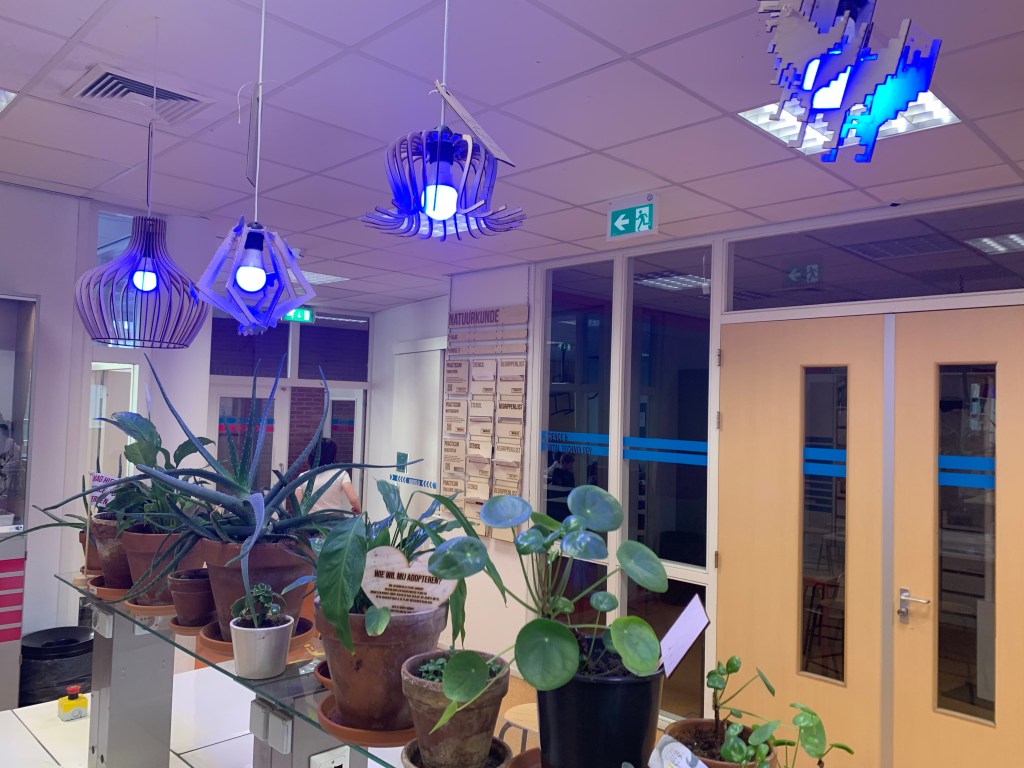
2) Plants: There are plants around a floor of the building with adoption signs. If you choose to adopt the plant, you take care of it all year. You can’t take it home. Would you adopt a plant?
February 15th, 2022: Which pathway would you choose?
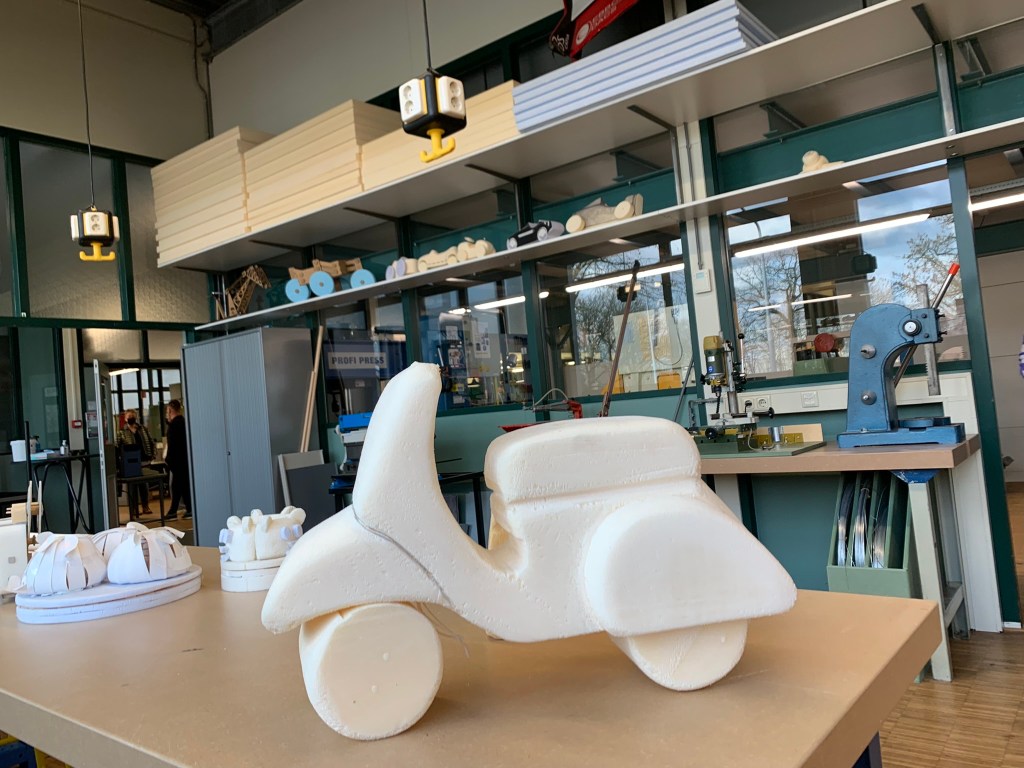
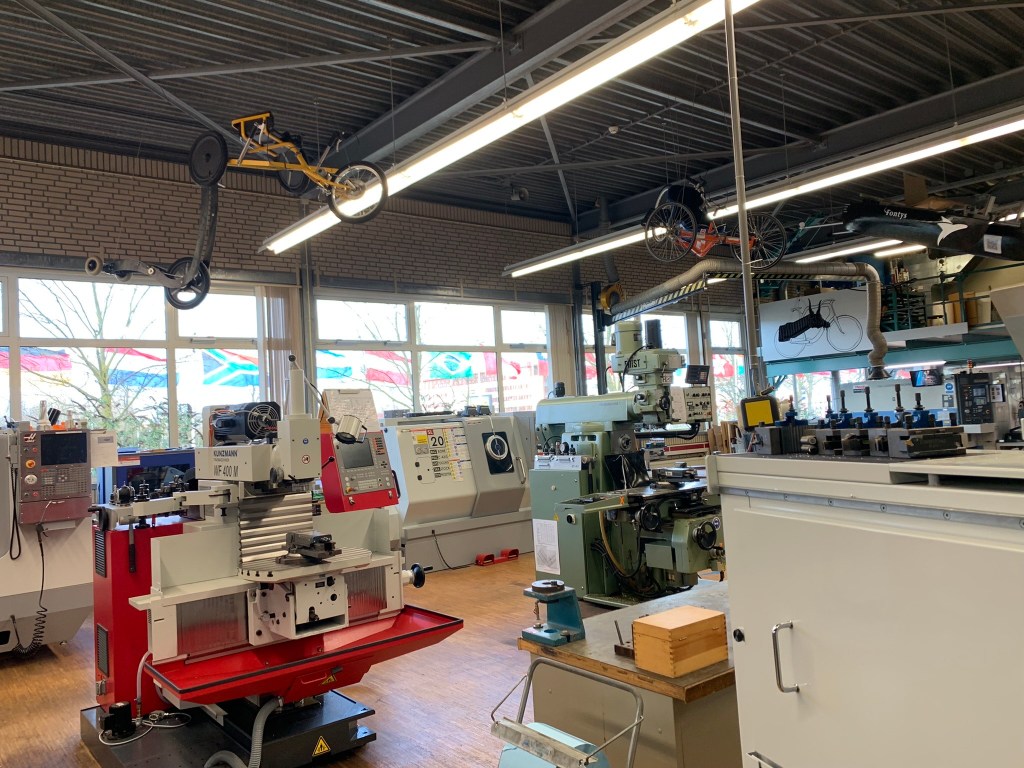

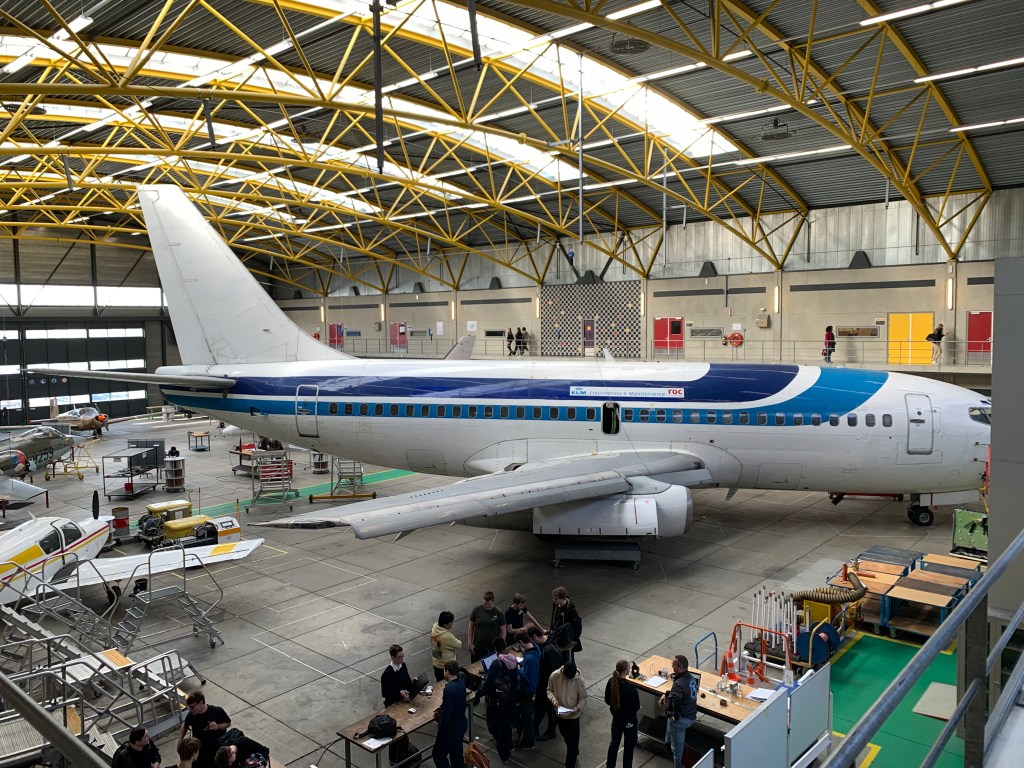
Pictured: A classroom at Fontys University of Applied Sciences with machinery for building bicycles from scratch. Students in a classroom learning about airplane mechanics at MBO Airplane College.
February 15th, 2022. Greetings from Fulbright in The Netherlands. As I’m on a Fulbright scholarship for the semester, I like asking my students for their opinions of Dutch education. Below is a question I asked them on google classroom:
Let’s say you are finishing your freshman year of high school except that you are in Holland. You can move ahead as normal or select from the college/university options below. Which would you choose?
Option 1, MBO Airplane College: You’re done with high school. Instead of being a sophomore at Lab, you decide to go to the Airplane College. Your major is airplane mechanics where you repair airlines. You graduate and start working at the end of senior year. If you prefer not to work straight away, you can move onto Applied Sciences.
Option 2, University of Applied Sciences: You stay another year at Lab and graduate at the age of 15/16. Instead of junior year, you decide to go to Applied Sciences. Your major is mechanical engineering where you research, design and build interesting stuff (ie: a scooter or a bike). You graduate in four years. If you prefer not to work straight away, you can move onto university.
Option 3, University of Amsterdam: You stay another two years (in Holland, traditional high school is only three years). You decide at the age of 16/17 to go to The University of Amsterdam. Your major is civil engineering where you do traditional schooling with test taking. You graduate in three years. If you prefer not to work straight away, you move onto a Masters degree (1 year more).
February 3rd, 2022: Would you select a major at 14?

February 3, 2022. Greetings from Fulbright in The Netherlands. As I’m on a Fulbright scholarship for the semester, I like asking my students for their opinions of Dutch education. Below is a question I asked them on google classroom:
Imagine:
You are starting high school at 13/14 years old and need to select a major. Your choices are: Science & Technology (history/ELA classes are optional!), Science and Health, Economy and History (science classes are optional!), or Culture and Society (no math or science needed at all!). What would you choose? Would you prefer not to choose any major?
Three years later, you turn 16/17 and need to start college. You can only select a major based on what you studied in high school.
For example, you will not be able to be a nurse if you selected Culture and Society or Economy and History as a major when you were 14. You can only study dance, communications, language or teaching. If you studied science, you could only choose a health profession. If technology was your major, you can study engineering in college. If you chose economics, you can study business or political science.
If you want to change your major, you have to repeat a year or two of high school.
OK…WHAT’S YOUR OPINION? Do you like this system?
Pros: You only study what you like for high school and college.
Cons: You can only stay the path you selected when you were 14 or repeat some of your studies.
January 25th: Would you cycle to school?



January 25th, 2022. Greetings from Fulbright in The Netherlands. As I’m on a Fulbright scholarship for the semester, I like asking my students for their opinions of Dutch education.
I thought of you students because the students out here are all on bikes!
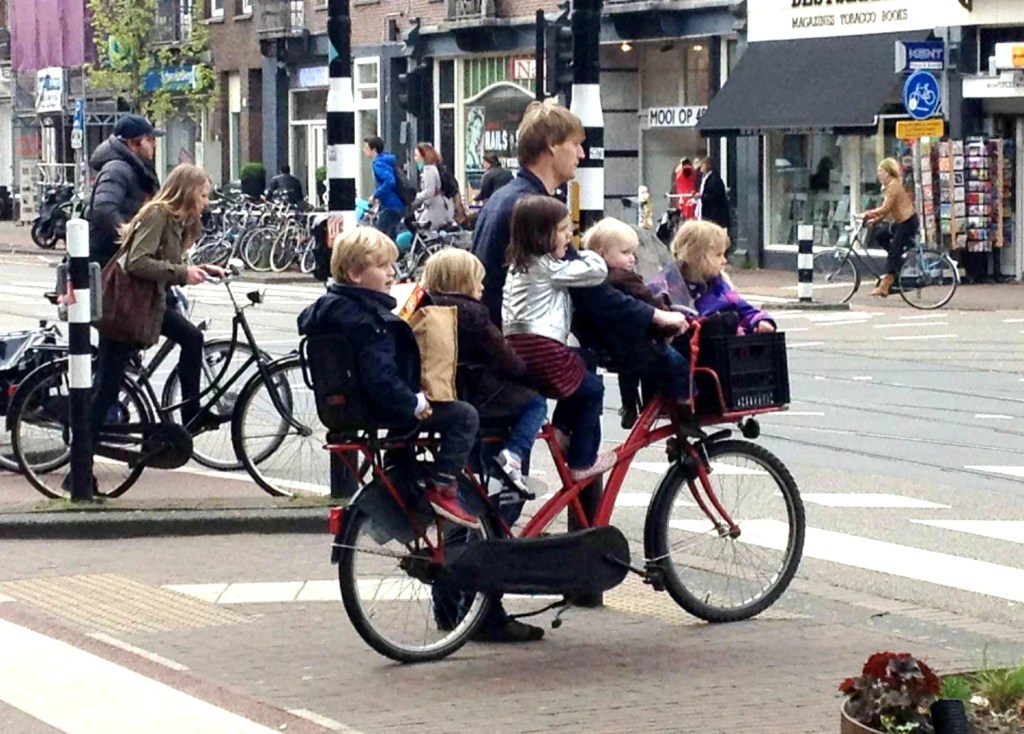
The city of Amsterdam is on lockdown and so I have taken up the past-time of people watching. The Dutch start cycling at a young age when elementary school students cycle to school with a parent/guardian. When students bring their own bikes, they park them in the school parking lot or garage.
Instead of taking pictures of strangers, I’ve found some stock photos to show you what I’ve seen:
*A dad cycling with three children
*A teenager using texting rather than putting his hands on the handles
*An elementary school with children’s bikes parked outside
When I cycled for the first time in a while out here, I had to act like a local by moving quickly. I find it harder cycling here than in the city because of how quickly everyone moves to keep pace with the traffic.
Do any of you cycle? Where in the city do you cycle? Would you rather cycle to school if everyone else was doing it or would you prefer to take the bus/train?
Careers that Motivate: Jupiter and the Giraffe
Meet Suzannah Mahala and Samuel Gregory, Founders of Jupiter And The Giraffe. In this video, they discuss what it’s like running a brand strategy and design studio. They both discovered they had dyslexia and ADHD later in life and found strategies for completing schoolwork that continue to help them as professionals.
Things Never to Say to Someone with a Disability
How Students Process Math Instruction
Interview with Juliet Exams for the Adventurely series, Meet The Nomads. Juliet speaks on tutoring as a digital nomad at the Dojo Co-Working space in Canguu, Bali.
The Jane Goodall Institute
In this video I made as a STEM Ed Innovator Fellow, I share tips for applying Democratic Teaching through on a collaboration with Jane Goodall Institute’s Roots & Shoots.
Green Awareness Brooklyn
When I would teach science, I spent my summers on farms and biological stations in Costa Rica, Ecuador, California, Spain and Italy with the funding received from the Earthwatch Institute, Inquiry in the Rain Forest, and Fund for Teachers. My vimeo site, Green Awareness Brooklyn, offers ideas for how to build solar cookers and food dehydrators as well as how to measure carbon and water levels.
The Earthwatch Institute
In this video, the Earthwatch Institute brings their cameras into my urban farming classroom at Williamsburg Preparatory High School in Brooklyn, NY.
 JULIET CRUPI